How Does Sports Massage Help With Muscle Recovery After Exercise?
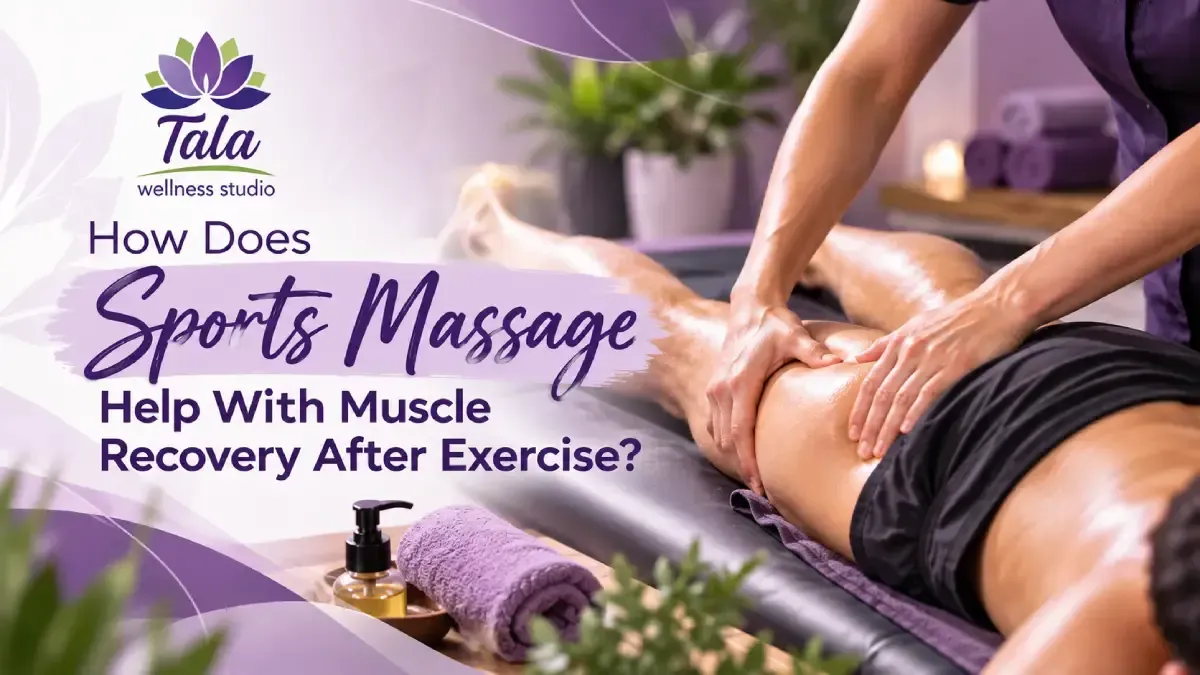
Sports massage helps muscle recovery mainly by reducing delayed-onset muscle soreness (DOMS), easing post-workout muscle tension, and modestly improving flexibility. Research shows these effects are small to moderate rather than dramatic, and massage has not been shown to directly boost strength, sprint speed, or endurance. Its real value is in how your body feels in the days after hard training: less soreness, less stiffness, and a calmer, more rested state.
This guide explains how sports massage works, what the research says, when to book a session, and how often to go.
How Does Sports Massage Support Muscle Recovery After Intense Exercise?
When you train hard, especially with unfamiliar movements, heavy loads, or lots of downhill running, your muscles absorb microscopic stress. That is a normal part of getting stronger, but it often brings soreness, stiffness, and a feeling of heaviness in the legs or arms.
What DOMS actually is. Delayed-onset muscle soreness is the aching and tenderness that typically starts 12 to 24 hours after exercise, usually peaks between 24 and 72 hours, and fades within about five to seven days. It is most common after eccentric work, where the muscle lengthens under load, such as lowering a weight, squatting down, or running downhill. Despite a popular myth, DOMS is not caused by lactic acid, which clears from the body within an hour or so of exercise.
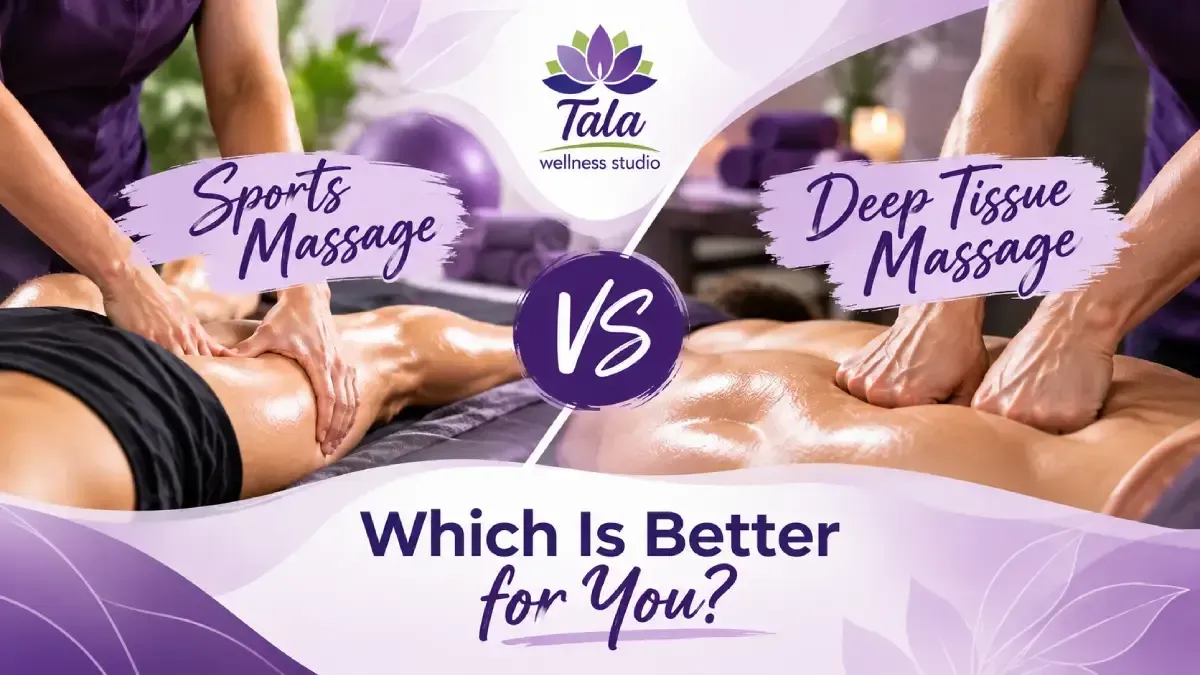
What massage does. Sports massage uses focused techniques such as effleurage (long gliding strokes), kneading, compression, and deeper work on tight areas. These techniques are believed to help in several ways:
- Calming the nervous system. Touch and pressure can lower muscle guarding and promote relaxation, which often reduces the perception of pain.
- Easing muscle tension. Working on tight or overworked tissue can reduce that "knotted" feeling and help muscles settle after training.
- Encouraging movement. Many people feel looser and more willing to move after a session, which supports gentle active recovery.
It is worth being honest about the mechanism: researchers still debate exactly how massage works. Early claims that it "flushes out toxins" or dramatically increases blood flow to muscles are not well supported. The most consistent benefits seem to involve how sore, tense, and fatigued you feel rather than a measurable change in muscle performance.
What Are the Main Benefits of Sports Massage for Muscle Recovery?
- Less muscle soreness. This is the best-supported benefit. Studies pooled in large reviews show that massage can reduce DOMS, particularly when it is received within a day or two of hard exercise.
- Improved flexibility and range of motion. Research finds small but real improvements in flexibility after massage compared with no treatment. Many people notice that stiff hips, hamstrings, calves, and shoulders move more freely afterwards.
- Reduced post-workout muscle tension. Tight, overworked muscles often relax under skilled hands, which can make everyday movement more comfortable between training sessions.
- Lower perceived fatigue. Some research suggests massage helps you feel less fatigued after hard exercise. Evidence here is mixed (see the research section below), but many athletes report feeling fresher and more ready to train again.
- A chance to rest and check in. Recovery is not only physical. A quiet hour on the table can lower stress, and a good therapist can spot areas of recurring tightness before they become bigger problems.
What Does Research Say About Sports Massage and Post-Workout Recovery?
The evidence is encouraging for soreness and flexibility, but more cautious for performance. Here are the key studies.
- Davis et al. (2020), BMJ Open Sport & Exercise Medicine. This systematic review and meta-analysis pooled 29 randomized studies with 1,012 participants. It found small but statistically significant improvements in flexibility and DOMS. It found no evidence that massage improves strength, jump height, sprint speed, endurance, or fatigue. In short: massage may help you feel and move better, but it is not a performance enhancer on its own.
- Dupuy et al. (2018), Frontiers in Physiology. This meta-analysis of 99 studies compared recovery methods, including active recovery, compression garments, cold-water immersion, contrast water therapy, and cryotherapy. The authors concluded that massage was the most effective method for reducing DOMS and perceived fatigue, and that massage and cold exposure were the most powerful options for reducing markers of inflammation.
Why the studies differ. The two reviews disagree on fatigue. Differences in how studies define "massage" (technique, pressure, duration, and timing), how soreness and fatigue are measured, and which studies are included can all shift the results. Pooled evidence for soreness is the most consistent, which is why that is the benefit to lead with.
The takeaway.
Sports massage is a reasonable, low-risk recovery tool that can reduce soreness and improve flexibility. It works best alongside the basics that matter most: sleep, good nutrition, hydration, and sensible training load. It does not replace them.
When Should You Schedule a Sports Massage After an Intense Workout?
Timing depends on what you want from the session.
- Within 24 to 48 hours after a hard session or event. This is a sensible window for soreness relief, since DOMS typically starts to build within 24 hours. A lighter, gentler touch is often best right after a very intense effort.
- Once soreness has peaked. If you are very tender at 24 to 72 hours, a lighter session can still help, with pressure adjusted to your comfort level.
- Between training blocks. Regular sessions during heavy training periods can help manage accumulated tension and keep you moving well.
- Before an event.
If you have a race or competition, schedule deeper work several days before and keep any pre-event session light so your legs are not left feeling sore.
When to skip or check with a doctor first.
Avoid massage over acute injuries, open wounds, unexplained swelling, or a suspected blood clot, and postpone it if you have a fever or acute illness. If pain is sharp, localized, or lasts well beyond a week, get it assessed by a healthcare professional. Tell your therapist about any medical conditions, medications such as blood thinners, and recent injuries.
Frequently Asked Questions
Can Sports Massage Relieve Delayed-Onset Muscle Soreness (DOMS)?
Yes, it can help. Large meta-analyses find that massage reduces DOMS compared with no treatment, though the effect is small to moderate and varies between people. Massage will not make soreness vanish, but many people find it eases the worst of it and makes movement more comfortable while the muscles repair.
Does Sports Massage Improve Flexibility and Range of Motion?
It can, modestly. Research shows small but significant improvements in flexibility after massage compared with no intervention. The effect is often noticeable as a temporary increase in how far a joint moves comfortably. For lasting gains in mobility, combine massage with regular stretching or mobility work.
Can Sports Massage Help Relieve Post-Workout Muscle Tension?
Yes. Targeted pressure and kneading can help tight, overworked muscles relax, which is one of the most commonly reported benefits. Tension relief is partly physical and partly neurological, as relaxation lowers the body's protective muscle tightening.
How Often Should You Get a Sports Massage for Muscle Recovery?
There is no single research-backed schedule. As a practical guide, recreational exercisers often do well with a session every two to four weeks, while people in heavy training may benefit from weekly or fortnightly sessions. Many also book one after a big event, race, or unusually hard block of training. Let your soreness, training load, and budget guide you, and talk with your therapist about a plan that fits.
Is Sports Massage Better Than Rest for Sore Muscles?
They do different jobs, and you need both. Rest, sleep, and nutrition are the foundation of recovery, because that is when muscles actually rebuild. Massage is an add-on that can reduce soreness and tension while you rest. Light movement, such as walking or easy cycling, also helps. Massage works best as part of a recovery routine, not as a substitute for rest.
Make Recovery Part of Your Training with Tala Wellness Studio
Sports massage will not make you stronger or faster by itself, and honest providers should say so. What the research does support is meaningful: it can reduce muscle soreness, ease post-workout tension, modestly improve flexibility, and help you feel more rested between sessions. Booked at the right time and combined with sleep, nutrition, hydration, and smart training, it is a worthwhile part of staying active and feeling good.
If you are ready to try it, Tala Wellness Studio offers sports massage with Iryna Standley, a therapist with more than 14 years of experience across luxury spa, clinical, and mobile settings. That range of experience gives Iryna a wide set of skills to draw on, from relaxing recovery work to more focused treatment of tight, overworked areas.
What sets her approach apart is that she takes time to understand what each client needs, then shapes the session around their goals. Whether you want to ease tension after a hard week of training, support recovery after activity, or simply make room to rest, your session is built around you rather than a fixed routine.